
 Free shipping on all orders above
Dendrobium – Basics
Sunlight : 50 ~ 75% daily.
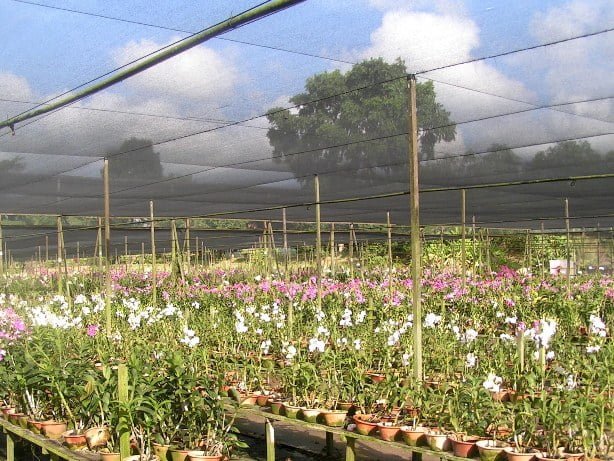
In orchid farms, nets are cast above the plants to create a semi-shaded environment (lath houses). This creates an environmental condition of 50 ~ 70% sunlight, which is conducive for growth and flowering and prevents leaves and flowers from sunburns. Unfortunately, such measures are not practical for most private collectors or home growers yet this does not mean that Dendrobiums can be deprived of sunlight. Sunlight is still the most important element, alongside water, to ensure a healthy plant and its flowering. Dendrobiums should be exposed to at least 8 hours of sunlight a day. Look out for areas in your garden or home that are adequately exposed to the sun.
Water :

Watering is slightly trickier than sunlight, as it depends on environmental factors and pot medium. On a serious note, incorrect watering can induce plant death. Bear in mind that excessive watering induces root rot which promotes fungal growth, and other symptomatic issues (which is more detrimental than watering too little). That is why proper orchid pots are porous to allow excess water to sieve through. Moreover, Dendrobiums are typically grown in charcoal – just the right type of pot medium that does not retains excess water, and allows roots to “breathe”.
Optimally, Dendrobiums can be watered (mostly onto their roots) during times of the day when sunlight is mild (approx. 8 ~ 10 am ; 4 ~ 5 pm). These are times of the day whereby orchids can best absorb water for photosynthesizing (feeding); and there are several hours of daylight thereafter to help evaporate excess water. Watering during mid-day; or in the hot sun could “shock” the plants. Most of the principles behind orchid care lies in being gradual. Analogically speaking, it is very uncomfortable for the plants to be splashed with cool water when they are already heated up in the hot sun.
Dendrobium – Advanced
Growing upright
A simple technique is to tie the stems together – not too tightly, but just enough to keep them growing in a desired, compact manner. This is particularly effective when performed on younger Dendrobiums – as in building a good foundation.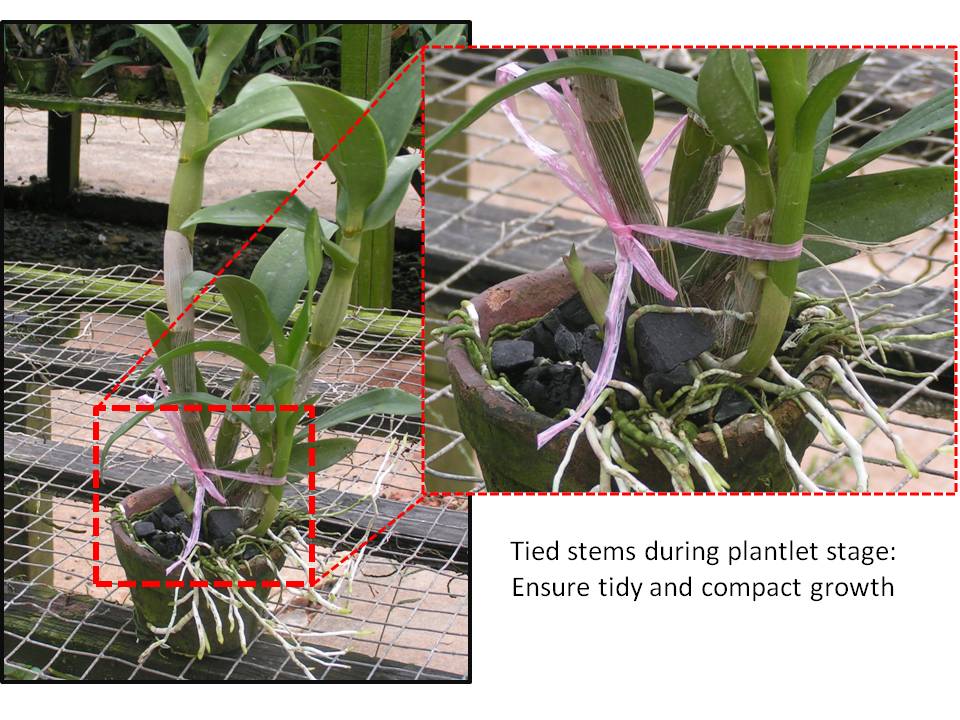
Trimming & Pruning – Flowers
It has been said that cutting off Dendrobium flower stalks can spur production of more flowers. This is true with certain ambiguity in need of clarification. Technically, blossoming flowers are signs that conditions are right, and at the right conditions, the Dendrobium plant desires to propagate its genes – thus producing flower. In simple terms, cutting off the flower stalks will trigger Dendrobiums’ “survival instincts” – where its desire to flower is disrupted, thus encouraging it to produce even more flowers for compensation. However, the key is to cut the flower stalks before it fully blossoms. If one allows all flower buds to blossom and wither off, it is not going to make a big difference to cut it off or not. Harvesting the flowers prior to full bloom inclines flowering to a certain extent.
Re-potting
A common question posed is “why re-pot?”. Understandably, re-potting will subject the Dendrobium plant (in fact, all varieties of orchids) to certain degrees of stress. Moreover, root systems of Dendrobiums will take up to 3 ~ 5 months to re-established themselves in their new pots. And in unfortunate cases, re-potted Dendrobiums may stop thriving or end up dying. But this section hopes to alleviate some doubt, and also some fear with regards to altering the state of one’s plant rather drastically. To put things into perspective, the recovery time for re-potted Dendrobiums is relatively short, compared to other types of tropical orchids.
Re-potting is commonly done for 3 reasons:
1) Switching to a bigger-sized pots for more growing space
2) Propagating and growing of new pseudo-bulbs/keikis
3) The new pot is prettier
Larger pots provides adequate space for its roots and pseudo-bulbs to grow, which in turn, signals that the plant has adequate space to grow as a whole. In most orchid farms, pot sizes used for Dendrobiums are usually capped at around 25 ~ 30 centimeters (10 ~ 12 Inches) in diameter. Such sizes are trialed and tested for Dendrobiums to achieve their maximum height (varies between 1.3 ~ 2 meters amongst hybrids).
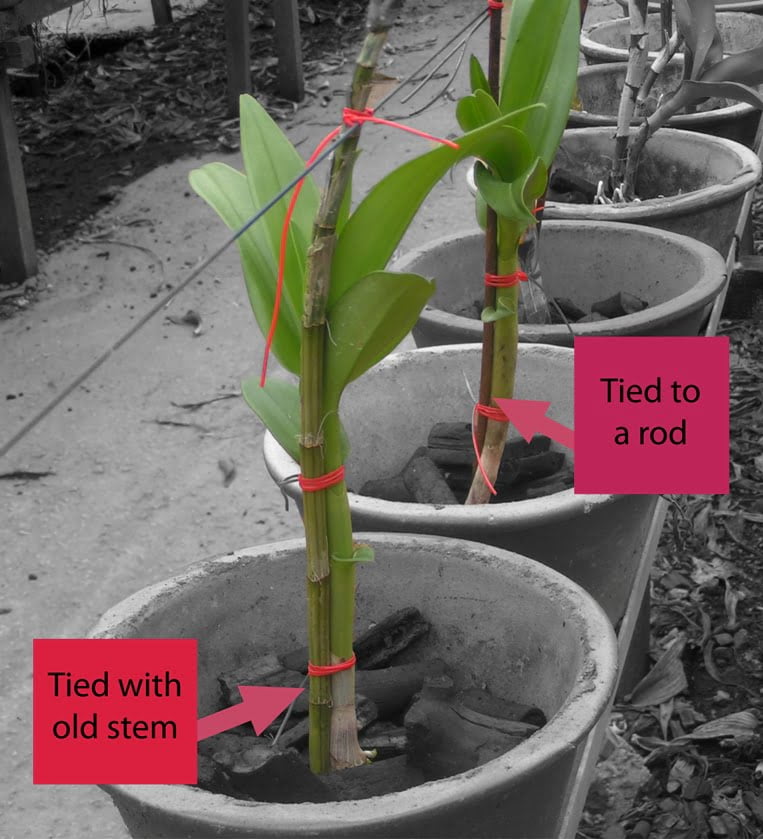
Care needs to be taken when one is cutting off unproductive old roots/stems, prior to re-potting – to avoid injuring the pseudo-bulbs. It is highly advisable to treat the plant/keikis with fungicide as cuts made are open wounds after all. Moreover, new charcoal can be used as they contain less pest/pathogens. Also, line the Dendrobium plant nearer the surface of the charcoal medium, rather than right at the bottom of the pot. This is because Dendrobium roots prefer to “breath”. Crucially, the re-potted Dendrobium should be secured in a stationary position for months to establish itself firmly.
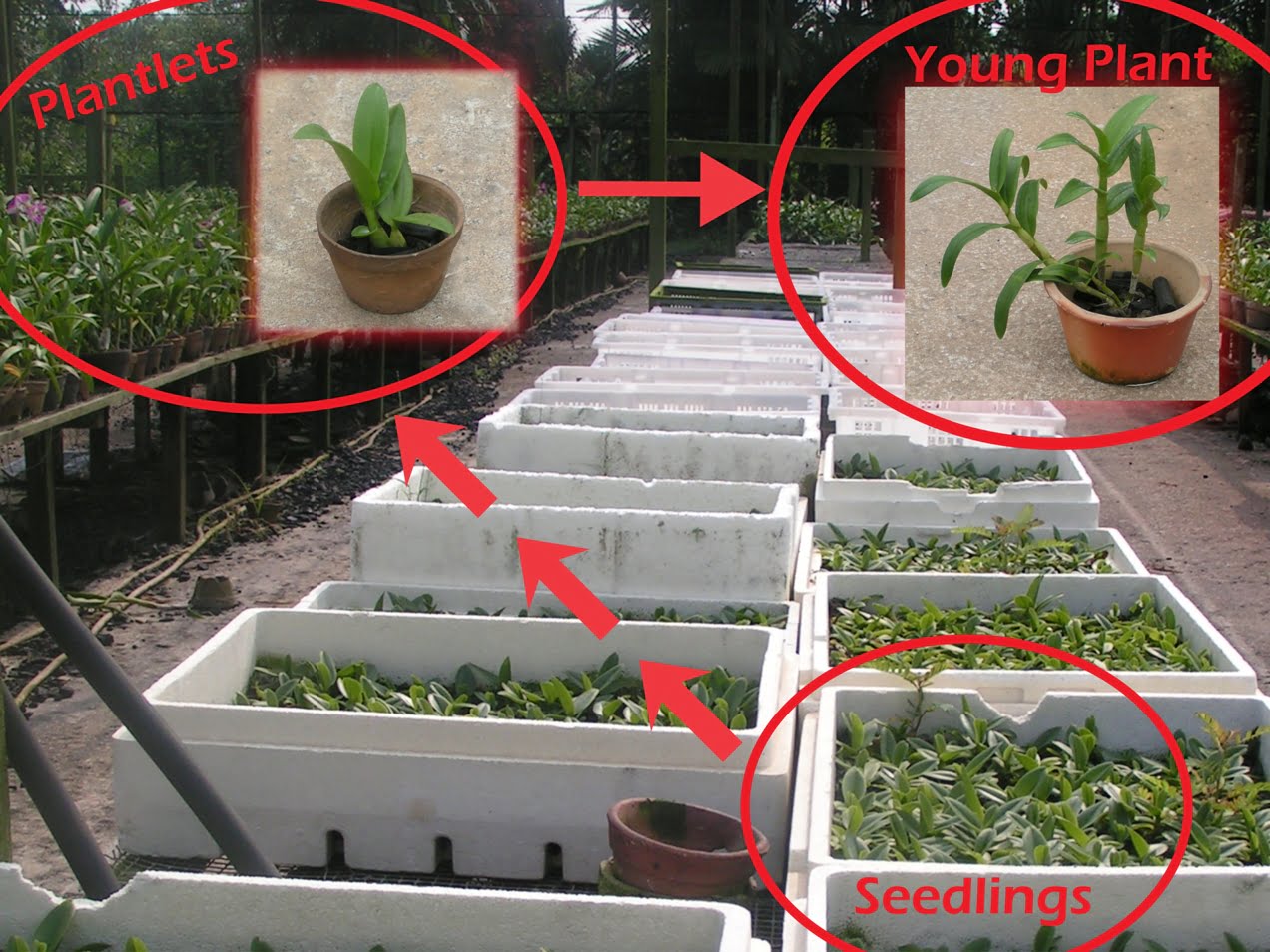
In Toh Garden, Dendrobiums seedlings are grown in communal trays for several months, prior to growing in small pots. The small pots provides adequate space for a healthy root cluster to form; and limited peripheral space aids in upright growth of Dendrobium plantlets. Or rather, bigger pots have excessive peripheral space, allowing outward/side-way growth, instead of upright growth.
_____________________________________________________________________________________________________
Dear Silverelf,
My dendrobiums have been producing new flower stalks (one plant has as many as 5 new flower stalks emerging!) but sadly, the flower buds don’t seem to be developing to maturity and the buds dry up and fall off. What do you think the problem is? I’ve never had this problem before. I leave my dendrobiums on a bright patio with morning sun, and shelter from afternoon sun. I water them once a day in the morning, and give them orchid growth fertiliser which I bought from Toh Garden twice a week (or once if I’m feeling lazy). I’d really appreciate your views! Could I be over fertilizing them? Thanks! Niki
Dear Noraini Aziz,
There can be several possible cause for this to happen. Some common causes could be due to root rot, insufficient sunlight or even pest attacks. Its unlikely due to over fertilizing if you use 1tsp per litre of water and don’t fertilize more than twice a week. It will be good if you can email us a few photos of your orchid so that we can identify the issue for you.
Cheers
silverelf
Hi, I live in NZ and I am finding it hard to get accurate information regarding pruning my orchid.
Would you have a picture of how far down to trim the canes. I have about 6 canes with no leaves. Thanks.
Hi Anna,
Do not trim the canes, instead separate them from each other by pulling them apart or cut along the sides like how you separate the keikis from the mother plant. I suppose you are referring to Dendrobiums?
silverelf
Hi there,
I’m trying to grow my first orchid plant which is a dendrobium. I have some questions which I hope you can answer.
First, I read on other websites that the orchids require mounting. May I know what is a suitable mounting material for my dendrobium which also has a weak stem and can’t grow upright?
Second, I would like to know what kind of soil is suitable for orchids?
Thank you for answering my questions.
-Kate
Hi Kate,
I suppose that your Dendrobium is not potted yet that’s why you need to mount it. You can mount your Dendrobium on a piece of bark or drift wood using wires. Alternatively, you can also grow it in charcoal with a stake for support. If your Dendrobium is weak, try growing it in more shade before growing it in 50% shade. This will assist it in recovering faster.
This depends on what orchid you are growing. Soil is usually suitable for orchids like Arudina, Spathoglottis etc but you can’t use soil to grow Dendrobiums as it will cause root rot etc.
silverelf
Hi,
My hubby bought 2 miniature orchids that are planted on seashells, which I think they are smaller breed of Dendrobriums. We placed them in our laundry yard and within a week, the flowers dried up and dropped off despite we misted it very frequently. It’s only recently we shifted them to our living room near our full length window where we have pretty strong sunlight coming in between 3-4pm. I cut off the orchid spike and spray some flowering foliage spray to induce flowering. Leaves are pretty bright green for now.
I’d like to understand:
1)Are we subjecting them too much sunlight?
2)Should we re-pot them? If yes, how do we re-pot them from the shells?
3)How do we know whether the orchids are getting enough water and well fertilized?
4)Is it true that orchids get the best sunlight from the eastern sun?
5)Can they grow well under normal florescent lights?
6)Is it possible to place orchids in the bathroom?
Thanks for answering my questions patiently.
Katie
Hi Katie,
1) The orchid leaves will exhibit signs of light stress (e.g. signs of purpling/yellowing initially and dark spots due to leave burns later on) if sunlight is excessive.
2) It is not necessary to re-pot the orchids unless it overgrows the shell. For repotting, kindly refer to http://tohgarden.com/orchid-care/dendrobium/ under the repotting section. You can use a small to medium size pot for repotting miniature instead of the usual large ones.
3) The pseudobulbs will be turgid, smooth and fat if they are receiving enough water, nutrients and sunlight. Older pseudobulbs that have finished flowering can show signs of wrinkling, this is fine but younger pseudobulbs should not have these signs.
4) I’m unsure about this as our orchids are exposed to all directions of sunlight in our nursery. I believe this is true to certain extent though as the morning sun (eastern sun) is not as scorching as the afternoon sun as the morning environment is cooler, so there’s lesser chances for heat stress for the same amount of light introduced to the plant.
5) It is possible to grow orchids under normal florescent light but do note that the amount of light that the plant receives from a normal florescent light is likely to be much lesser than that of sunlight.
6) This is subjective, depending on what type of orchids you wish to place in the bathroom. It must be able to tolerate a good amount of moisture. The miniature Dendrobium‘s probably fine but you will have to keep their roots dry with good air movement and the amount of lighting has to be minimally sufficient.
silverelf
I have a new Dendrobium orchid but it looks nothing like anything I can find on the Internet. It has one tall fat stem and leaves and flowers grow directly out of this stem all the way up the stem.
My questions are – do I remove the flowers when they start going over and how do I treat the plant when it has finished flowering?
Will a new stem grow or more flowers and leaves from the current stem?
Hello Joy,
Its likely that you are not growing the tropical type of Dendrobium that we are growing. The orchid that you describe is similar to that of Dendrobium nobile type. These are slightly more temperate orchid. Jiro Yamamoto is a famous hybridizer of numerous nobile type hybrids since the 1950s. You may wish to google for Yamamoto Dendrobium to learn more about this type of orchid.
To answer your question, yes new keikis will grow from the current stem when summer and spring arrives. Keikis are more likely to be reproduced when the climate is hot. If the plant experiences cold nights, it will tend to flower rather than produce new keikis. This is of course also dependent on how healthy the plant is. If the plant is stressed, it may still produced shoots instead of flowers or produce lesser flowers.
silverelf
Hi,
I have recently acquired 2 pots of orchids. It has many stalks of purple n green flowers. I place them in my balcony n waters them every morning by using a small spray bottle. Of late, I notice the leaves start to turn yellow. Some of the leaves also have white spots on it. I don’t know what is the cause of it. Is it not enough water or is it that the weather is too hot?
hi toh garden. .. Can i have your email i would like you to take a look of these orchid plants and advise me…
tnks
Hi Helen,
It depends on what kind of white spots. It could be some kind of fungus or patchy fibrous spots that were due to sun burn. If its fungus, you can clean up the leaves with a wet cloth using light amounts of soap and apply fungicide after that.
silverelf
Hi Mr Lee,
Please email us @ [email protected].
silverelf
Hi,
I just got four new dendrobium orchids and i just want to know how frequent should i water them?
Thank you.
Hello Toh Garden,
Can you please give me some signs on how to know if my Dendrobiums are getting enough water?
Thank you.
Hi Kier,
Kindly refer to http://tohgarden.com/orchid-care/dendrobium/ for watering of Dendrobiums.
Watering frequency differs in different environment. Over-watering will cause the root portion to rot, under watering will cause the plant to shrivel up.
As a rule of the thumb, water when the media is dry, do not water when its wet, always allow the water to dry out in the media before watering.
If the plant has sufficient water, it should look turgid and not shriveled up. Fertilizing regularly plays a part too.
silverelf
Hi silverelf,
Im from the Philippines and were in a tropical country. How often should i water them?
Kier
Hi
Im from Sydney,Aust.I repotted my dendrobiums using horticultural charcoal and permilite only.I noticed rooys are drying up.I water them evry other day.How often should I water these now that it is almost summer
Hi I am from Sydney Australia.I recently tepotted my dendrobiums using horticulural charcoals only and a bit of permilite.I water these every other day and I noticed roots are turning brown.What should I do?It appears roots are.drying out.It is almost summer here.Shoukd I soak it in water to compensate for its easy drying up status?I notice the water just easily passes thru the pots when I water them. I have small orchids-dont know the name but I tried tosave it by using the same charcoal media and leave it soaked in water and pebbles.After a few weeksI saw roots forming on the the top of the stem….Please help me.
Hi Rachel,
The humidity at your place should be lower than that of Singapore.
Try mixing charcoal (1/2) and sphagnum moss (1/2) for media. The sphagnum moss will help to retain moisture in your media.
Before repotting, fill the bottom of the pot with a layer of large bite size charcoal first for drainage purposes before using the mixed media.
Hope that this helps!
silverelf
I have a number of dendrobiums that all have some kind of disease in the flowering stage, the flowering shoots get deformed at the end, the buds are discolored and drop or dry up. Could this be viral (it seems to have spread to all my orchids), I don’t see any insects and the plants look otherwise pretty healthy.
Hi Claude,
Its still very likely due to insects.
The deformed bud could be due to sap sucking insects like aphids. The discolored buds that drop or dry up could be due to holes punctured in the bud by insects.
Insects might be too small and thus not easily visible.
Certain insects may only attack the orchids at night so you might not see them in the day.
They puncture holes in the buds and lay their eggs.
Try applying insecticide regularly on the flowers and shoots to see if conditions improves.
silverelf
Hi, I´m from Bolivia in South America. I want to ask you about the Dendrobium´s media. I´ve seen those photos and I´m no sure if the pots have charcoal completely (100%). It´s possible to do this and grow Dendrobium or another kind of orchids only with charcoal ?
Hi Claudio,
The answer is it depends on your climate. Singapore has wet and humid water throughout the year. Air moisture retention is high. For your climate which is dryer, you can mix sphagnum moss with charcoal, 50/50 to grow Dendrobiums. Hope that it helps! =)
silverelf
Hi, I have some purple dendrobium that have been around for a few years. It was previously taken care of my our domestic helper but she has since return home for good. Currently… the fate of these plants are in my hands, and I’m new to gardening, would like to find out more about them.
Currently 2 of these plants have flowers, but the flowers on one of those plants are dying off. I think there are also fungi black spots on the leaves of the plant. Is there anyway I could send you pictures to get the best advice?
Thank you.
Hi Eileen,
You can send your pictures to [email protected].
silverelf
Hi, I am from Brunei. I have a question about media. I am building a small nursery outside my house for dendrobium which are going to be used as cut flowers. I need your advice on which media is better for my 400 blooming dendrobium I just ordered. Should I grow them on coconut husk or should I grow them in a pot filled with charcoal? Can you give advice in terms of maybe cost, effectiveness, problem and overall? If you have any extra advice, that would be nice. Thank you
Hi Soon Tian,
The growing media should depend on your climatic condition. Its best that you try out on a small plot using the same Dendrobium and the two different media for comparison. It will take about 3 – 6 months for a trial run. After about 3 months, observe which type of media enables the Dendrobium to root faster and stick to that. I am not sure of your costings in Brunei, you will have to find this out by sourcing for the products that you need locally unless you wish to hire us for consultation. 🙂 The cost will not be the same for us here in Singapore.
For growing of Dendrobium for cut flowers, you will need the commercial variety. Commercial varieties grows fast, produces high yield of cut flowers, are diseases resistant and its cut flowers has good vase life after harvest and so on. Growing non commercial variety is also possible though if demand for the specific colour is good.
silverelf
Thank you Silverelf.
I will try to experiment with those 2 types of media then. One more question, I can see in your website photos that you are growing all of your dendrobium in pots filled with charcoal rather than coconut husk. Is it because it is better?
I believe Brunei and Singapore share the same type of climate. It is hot and wet all year round for me too with 2 monsoon seasons.
Hi Soon Tian,
Singapore is very wet and humid for most parts of the year, average annual rainfall is about 2,340 mm. Seems that Brunei is even wetter at an average annual rainfall of about 2,873.9 mm. So yes, I believe charcoal will be better for you too for providing good drainage. If the root portion is constantly too wet, fungus will develop and root rot may occur.
silverelf
Hi Silverelf,
I’m in Singapore, My Dendrobium leaves are turning yellow with dark spots and subsequently falling off. It’s not expose to direct sun as it’s next to my balcony with good morning sun so I don’t it’s due to sun burn. Please help.
Hi Angie,
Its okay for Dendrobium leaves to fall off from the bottom of the stem. New leaves will grow from the crown. But if the leaves are dropping off from the crown, this is not normal. Make sure that there’s no water stuck on the crown of the Dendrobium when you are watering.
Also, as the plant grows old, its also normal for the leaves to began having black spots (due to sun spots and chemical burns). This is also normal, it also signifies that its about time to re-pot your Dendrobium as you see increasing amount of black spots. Look through our section.
silverelf
Hi I got a few pots of dendrodium…I have been caring them for quite a few years and it keep blossoming …but this few months I spotted that whenever my orchid produce a new spike it will will dry out on the half way…last two months I still can see my orchid grow out it bud but it will turn yellows an fell off and this time the spike grow until 3 inches will dry out…I spotted quite a few pots of dendrodium is growing the flower spike but I can’t do anything just watch it dry out before it can produce the flower buds….pls help…by the way I from malaysia
Hi I got a few pots of dendrodium and it’s growing well for the pass few years. but currently this few month I spotted whenever there’s a new spike growing out it will dry out after grow 3 inches. Last month it still will produce buds by it end up yellow and fall off before it flower.right now few pots is producing new spikes but I can’t do anything …pls help..by the way I’m from Malaysia .
Hi Moon,
This could be due to pest that attacks the flowers buds. Pest like thrips can cause this.
Try spraying pesticide more regularly to the spiking buds and see if condition improves.
silverelf
Hi there,
I have two dendrobium for indoor and my question is, do i need to create a humidity tray for my dendrobium?
{ I’m living in Singapore } Plz advise. Thanks
Rachel
Dear Rachel,
You do not need to create a humidity tray for growing Dendrobiums here in Singapore as our humidity is high. However, you may need to ensure that your orchids receive sufficient sunlight and has good airflow. Most indoor conditions are not sufficiently adequate for growing Dendrobiums unless you are growing miniature types along window stills.
silverelf
Hi Moon,
Do you apply pesticide/fungicide to your orchids?
What you’ve described could be signs of pest infection.
This could also occur if your plant is not growing healthily.
E.g. not receiving sufficient sunlight/watering/feeding
silverelf
I bought a full grown dendrobium having five stalks four months ago. They were holding well till yesterday. Yesterday I noticed that the last leaves on two stalks are yellowing and have black spots. It is kept in a open area with no direct sunlight.
Hi Francis,
It is normal for Dendrobium to shed their last leaves.
They will continue growing more new leaves from the crown.
For those psuedobulbs that have finished flowering, they may produce a few more stalks of flowers but it is also normal for them to shrivel down.
Nutrients will gradually be transferred over to the old psuedobulbs to the new psuedobulbs.
silverelf
I have been buying potted orchid plants to grow them along the corridor of my HDB apartment. There is this one particular orchid plant which I think has white flowers, that I re-potted quite long ago. Although the plant grew well with healthy looking leaves, but it stopped at the point when it should start to flower. I could actually see a knob that looks like the tip of the flower stalk. The knob gradually turned dry and the plant remained dormant. New shoot appeared and it went through the same cycle. What is wrong with this pot of orchid plant or the way I am caring for the plant. I have other pots of orchids (different types) that are flowering. I am very perplexed. I thought it may be getting too strong sunlight and moved the pot to other position along the corridor but it did not help. Please advise.
Originally from the Caribbean, I am also questioning dendrobiums in Canada. I have them outside from May to end October in full afternoon sun & at this time of the year, they are in full bloom… Now inside they lose all their leaves from yellowing but keep all the flowers in a full sun window. I have always questioned if to chop off all the canes that no longer have leaves or to leave them…After a couple of years I have realized that I still get flower stalks coming out from the leafless canes along with one or two new leaf stems emerging from the roots that also produce flowers at the end of the Summer. Space providing; I have realized that there is no need to cut any part of the plant off unless it dies. In the Caribbean Dendrobiums thrive in full sunshine all year round and need no shade providing that it’s elevated from the soil on a bark or tree trunk just off of the soil to allow it’s roots to go where they want to…
Silverelf , I hope to stay in contact as I still have lots to learn and can never get a proper answer on questions except from my own experimenting …
Hi Coco,
It depends on what kind of Dendrobiums you are growing. I don’t think that you are growing the same type of Dendrobiums as the ones that we have. Our climate is tropical throughout the year. Yours is probably the nobile type of Dendrobium whereby the plant shed all its leaves before it flowers. Another type of Dendrobium that can take full sunlight is the lasianthera type. For our type of Dendrobium, we have to cultivate them under 50% shade.
silverelf
Silverelf, After lots of research ; I believe that the falling leaf orchids that I am concerned about are Bigibbum Dendrobiums… Done lots of research, that unlike the Dendrobiums that I know in the Caribbean, tells me that (now in the house) not to water them once they start to flower at the end of the Fall; Oct/Nov/Dec…Advise on these will be appreciated if you are familiar with this dendrobium… A good learning experience for your audience is a Falcorostrum dendrobium that I have in Toronto Canada that has never flowered for the six years that I have owned it ; It remains beautiful & green outside in full sunshine all Summer with no flowers…Last Oct/Nov I decided to no longer water and allow it to die as it had never given me flowers…The temperature was now going into freezing -1/-3 degrees C….All of a sudden the entire plant on every stalk was in full bloom . It was the 1st time I had seen it in all it’s splendor .
Hi,
My pot of dendrobium seems to be “stagnant” in growth after a few years without any baby shoot growing from the roots. Even it grow, the leaves turned yellow relative fast. How should I go about it to encourage better growth? Could other factors like overcrowding of other pots of orchid contribute to this?
The delighting part is, this pot of orchid has a young shoot growing out on a branch. When is the correct time to remove the shoot? How to go about the removal of the young without hurting both?
I plucked out the young (with the roots) with barehand for other pots but the young doesn’t seems to be growing. Please advise.
Hi John,
We only cultivate tropical Dendrobiums here in Singapore.
Yes, some Dendrobium like the nobile type requires cold treatment like Phalaenopsis and Cymbidiums in order to flower.
You can check out on Yamamoto Dendrobiums. =)
silverelf
Dear Kim,
This can be due to pest as well. Check at the knob of the flower stalk. If there are small insects like aphids or other sucking insects, you will have to spray some insecticide to the stalk of flower during its developmental stage. If there isn’t, it likely that the growing condition (light, ventilation) provided is not ideal or the fertilizers were not adequate.
silverelf
I would like to know why my dendrobiums are starting to have big black patches all over the leaves and stem?
Hi Sisi,
I’m not sure what kind of black patches you are getting but if they are wet, its likely fungal rot.
You may have over watered the plant. Reduce watering and apply fungicide twice a week till the fungal infected portion dries out.
As the plant grows old, black spots may also appear on the leaves. This should not occur on young plant/shoots. If this happens, it may be time to divide and repot your orchid, especially if its overgrown the pot you are using.
silverelf
Hi. I’m currently working in France. I was back in SG during my summer vacation recently. Before coming back to France, I decided to buy 2 pots of orchids as gifts for my friends. But since my arrival back in France, the orchids seem to be sick. Yellow leaves with some black spots and now they seem to have lost almost all of their leaves. On a good note, I’m noticing some new buds on some of the stems.
As a child, I had a lot of experience with orchids and other plants as I was part of the gardening club in primary school. However, I can’t seem to solve the problems that I have with these orchids. I’ve tried everything that I know. No direct sunlight, not too much water, aerated pots etc. Are they just not getting used to the weather?
FYI, it’s almost winter in France and conditions are very dry and cold. I keep them indoors near a south facing windowsill with no direct sunlight and I water them once a week and fertilize once a month (an advice that I got from the European Orchid Society).
Am I doing things wrongly or is there such a thing as a dormant period for orchids when they’re not in their normal conditions?
Thanks for your advice.
P.S. I can send some photos but I need an e-mail address.
Hi silverelf,
I was recently back in SG for my summer vacation. Before coming back to France, I purchased 2 pots of Dendrobiums as gifts for my friends. Upon my arrival, most of the flower stalks were snapped (due to jostling etc). I decided to keep the plants until they start to bloom again before giving them away.
I had a lot of experience with orchids and other plants as I was part of the gardening club back in primary school. I’ve taken care of them by keeping them indoors, putting them near a south facing windowsill with no direct sunlight, watering them once a week and fertilizing them once a month (advice from the European Orchid Society).
Yet, it seems to me that they’re not ok. Is it ok for the plants to not have flowers all year round? Plus, they’re almost out of leaves. The leaves turn yellow with black spots and then they fall. On a good note, the roots are white with no signs of rotting and there are several knobs on several stems.
I would like to know if I’m doing things wrongly. Perhaps I’m not watering them correctly. Can the plants readjust to their new surroundings? (France has 4 seasons and currently it’s winter; the weather’s cold and dry). Or do I have to follow the same treatment as I would normally do in SG? I will send you some photos.
Thanks for your advice.
Hi Hafiz,
We’ve received your photos and replied you through your email.
Yes, its likely due to the temperature, humidity as well as temperature issue.
It correct to cut down on the fertilizers when lighting conditions are not optimal.
Excess fertilizers may cause more fungi or moss to grow instead.
Wind flow is also important, and it will be best if temperature can be kept above 20 degree celsius.
Thank you.
silverelf
Hi,
I have 3 questions.
(1) Do U cut off the stem of a dendrobium after it has lost all its leaves, or do U leave it for the ‘store’ food to be pass off to the off spring? I refer to the leave stem and not the flower stem. (2) Am I correct to said that if the flower stalk is at the tip of its leave, its means that, its the final bloom and this stalk will not have future bloom? (3) U mentioned that some commercial bloom very well. How do I get those variety and how to differenciate those which are not? Thanks in advance.
Hi silverelf,
I have bought 2 pots of Dendrobiums 2 weeks ago. I keep them outside, but they are not under direct sunlight. I noticed the bottom leaves are turning yellow and have black spots. I have the following questions:
1) Did I not water them enough?
2) Must I put them under direct sunlight?
3) If I am to put them under direct sunlight, then they will not be sheltered and would get rained on when it happens. Is it ok for them to get rained on? Singapore weather is so unpredictable as it can storm any day. So what would be the best solution as I don’t fancy lifting and shifting my pots when it rains.
Thank you for your time to answer my queries.
Hi Jeffrey,
(1) There’s no need to cut off the stem of a Dendrobium after it has lost all its leaves. Yes, the old stem may produce new keikis, and food store will be passed over to the offspring. However, you may cut off the old stem if it affects your plant aesthetically.
(2) This is not true. Though this is true for many varieties, there are varieties that flower backwards on the remaining axillary buds on the stem. Most commercial varieties flower backwards.
(3) Commercial varieties are predetermined by their ideal characteristics. The more ideal characteristics a new hybrid has, the more valuable it is for commercial production. In countries like US, Taiwan and Thailand, research are done at the university level to ensure that varieties produced are productive as this affect the overall yield of the crop. Once identified, commercial varieties are ready to be slated for mass production. Ideal characteristics includes the form, colour, free flowering, disease resistant, vigorous growth and so on. Generally, I do not think that this is important for the layman unless you are selecting a new hybrid for naming and branding purposes. Commercial varieties usually flowers throughout the year when produced in quantity and thus its possible to maintain display in constant flowering state. =)
silverelf
Hi Lisa,
1) If the plant look dehydrated with wrinkles on the stem, then yes its due to not watering them enough. However, do not over water, it will cause root rot. General rule is to water only when the media has dried off completely.
2) Definitely not under direct sunlight unless you have curly Dendrobiums. Dendrobium should be cultivated at about 50% sunlight optimally.
3) The best solution in your case will be to have them sheltered under a greenhouse if you don’t fancy lifting and shifting the pots when it rains. But it should be okay to have the plants rained on occasionally, if the rain is very heavy for a couple of days, its better to shift them somewhere dry and airy.
silverelf
I had a new Dendrobium hybrid which I had done a cross-hybrid since 2010 and till now it still didn’t grow well. My friend told me maybe my hybrid would be miniature but I am still not sure as I see the old stem of the orchids the leaves are falling off but there’s new shoot growing and still not yet flower 🙁 Hope to seek your advice Silverelf.
Hi Silverelf,
I have a phaleonopsis orchid currently potted in spaghnum moss medium that I want to transfer to charcoal. Is there any particular way to do this? I was planning to pre-soak the charcoal pieces in water, then remove all the spaghnum moss from the roots and just add the charcoal into the pot. I’ve never tried this before and I can’t find any videos online, so I’d love to hear your advice. Also, do I have to wait for all the flowers to fall off before repotting? Thank you!
asha
Hi silverelf,
I am in Indonesia and recently bought a pot of Dendobrium with dark purple blooms. They are in the bathroom which is very airy with a North facing window. It gets plenty of sunlight in the morning until afternoon. It grows in a clay pot on what looks like charcoal pieces (looks like your dendrobium growth media). I have been advised to water it twice a day, so I run tap water intothe clay pot to ensure that all ‘charcoal’ and roots are wet.
1. Is it receiving too much sunlight? It has been 3 days and so far the leaves still look healthy, when wll; I start to notice signs of excessive sun exposure?
2. Am I watering too much? What is the best way to water Dendobriums?
3. When the blooms fall do I need to cut the spike?
Thank you very much for your advice.
Hi asha,
Phalaenopsis are usually cultivated in sphagnum moss under greenhouse conditions. The sphagnum moss retains moisture for up to 14 days. Watering frequency has to be controlled as over watering can lead to the basal root rotting. For cultivation in charcoal pieces on the other hand requires more watering as charcoal is porous and water retention rate is lower. There’s no need to soak the charcoal pieces in water.
Yes it is better to wait for the plant to finish flowering before re-potting. The re-potting process can cause the flowers to go droopy. Soak the root portion in water for a few minutes before removing from pot to reduce mechanical damages. Wet roots are pliable and doesn’t bend and break easily.
silverelf
Hi,
The way you water the plant is correct and good. By thorough flushing, acidic environment that builds up in the charcoal will get flushed away, promoting root growth.
1. No, its not receiving too much sunlight. You will see burnt leaves if sunlight is excessive but it should be unlikely since you are only getting more of morning sun than afternoon sun.
2. Only water when the media has completely dry out.
3. Yes, you will have better chance of flowering if you cut off the spike that has flowered.
You can read more on cultivation of Dendrobiums here http://tohgarden.com/orchid-care/dendrobium/
silverelf
Dear Ridhwan,
Apologies for the belated reply.
I missed out your comment from Jan.
Please do not worry about the leaves falling off the old stems.
It is normal for Dendrobium leaves to fall off at the base.
By now, your young shoots should have started growing to succulent shoots if well taken care of.
They will flower eventually. The old stems may still put out flowers again but the chances are fairly low.
silverelf
Dear Silverelf, I bought 2 Dendrobrium Orchid plants about 4 months ago with flowers on them. I put them in my balcony and they were doing well with new pseudobulbs coming out. Last month I had to travel for 2 weeks and I left them in my friend’s house where she placed then with her other plants. When I came back, I found one plant doing well but the other looked unhealthy with curly leaves and dried new suedo bulb. I thought it was because of over watering and I tried to water less at home. The plant looks better at my home but I notice an old suedo bulb turned brown and soggy. So I cut it off and then I saw a lot of tiny gray bugs inside it. But the other plant was still doing well. Though I bought them from the same place, I notice they have different mediums, one is with charcoal and the other with coconut husk. The effected plant is the one growing in coconut husk. I am thinking whether I should repot the effected plant to charcoal medium. By the way, I am from Singapore as well. I appreciate your advice on what I should do. Thanks.
Hi Zin,
Yes, please do repot your Dendrobium in charcoal. Coconut husk might be too wet, particular during the rainy season now.
For now, trim off the areas that are rotted, dip the cut area in fungicide and pesticide and leave the plant to dry after application.
After this, you can start repotting your orchid.
silverelf
HI,
i am john from Mauritius .,i bought some dendrobim flask in March 2014 and it’s now 2.5 month they are in tray..i am waiting them to be strong enough to put them in individual pots .. this i thing will be in oct2014 as now it’s winter here . I want to know …
1. why some of the plantlets give yellow leaves
2. I put them all in a mix of Charcoal/cocopeat and sphagnum moss…
they seem to grow well …as it’s the first time i am growing plant from flask …. i just want to get some tips on the watering …. should i keep the mix wet ( watering only in the morning ) .
3.Fertilasation is made every week ( with a very small amount of 20 – 10 – 10 Npk —) should i go on with …
thanks to reply
regards
JOhn
Dear sir/mam
I have a Dend. sulcatum that lost all its leaves. Could be that the medium (small bark) was to dry. I can’t find any info as to revive the plant again. Could you please give me advice. I live in South Africa- in a area withv dry winter with frost temp. and wet summers. I grow the plants in a greenhouse with heating in winter and cooling in summer. I find great pleasure in reading your advice on the care of orchids. Thank you very much
Hi, based from what I have read after the blooms wilt a new growth starts at the base of the pseudobulb which will later on produce the blooms. This is the process I have been seeing on all my dendros, but I have one dendro with a new basal growth that sudfenly die its only about 2 inches and the new growth starts to rot. What happens now to my dendro? Will it grow another one? There is only one lead in the bulb which rots. There is only 2 pseudobulb in my pot they both had produce blooms will these mean that i will have to wait for it to produce keiki from the pseudobulb once the leaves fall off? Pls advice this is one of my favorite dendro and I really feel bad about it. I live in the Philippines and this is the. First time i encounter it sometimes the new growth becaomes stunted but still it produces another growth which becomes healthy. Thank you
Hi John,
Its normal for Dendrobiums to shed their leaves from the bottom.
The yellow leaves can be peeled off and more green leaves will grow from the apex.
The mix should be watered thoroughly.
After which, only water after the mix has dry out.
Yes, please continue with your fertilization program.
silverelf
Hi Abby,
You may have watered a little too much which resulted in the new growth rotting.
New growth shoots are soft and not hard like the old bulbs.
Try applying some fungicide to see if the new growth can be saved.
Yes, the old bulb should still produce new bulbs but as mentioned, please apply fungicide to your old bulb as well in case the fungal rot spreads.
silverelf
Dear Suzanne,
I believe its not just the dry bark. (You may try adding some sphagnum moss to your bark mix)
The air humidity should be low during winter.
It will be a good idea to add a humidifier or misting system to your greenhouse.
Growth tend to be very slow during winter.
You will be more likely to observe new leaves or shoots being put out after the winter period.
silverelf
Hi, I have a dendrobium and have enjoyed its beauty for 2 months. The flowers have all gone now and I have repotted them to a nice glass vase and mounted them on large vertical pieces of charcoal. The orchids are in my bedroom, placed on top of a table next to the window. My white curtains are always there to block direct sunlight. I notice that the leaves don’t look healthy, a bit dark green and dry, some have yellowed and I plucked them out, the roots appear dry (like shredded paper). Could the airconditioning be the culprit? Can they withstand 75 degrees Fahrenheit? I water it once every 2 days – 4 sprays of water from a small spray bottle. I have not sprayed any fertilizer on them. There are small baby shoots sprouting from the base so does that tell me I’m caring for it right and the adult leaves are wilting as part of aging? Thank you in advance for your help.
Recently my flowers wilt before the rest of them have opened on the same flower stem. My Den. Sri Udom also
has weak colours. Should I fertilize less often cos of
flowers drying up before the next even opens or could
it be not sufficient water? Thank you.
Hi John,
It is normal for Dendrobiums to shed their old leaves as you’ve described.
After their prime, the parents stems will start producing baby keikis below and shrivel down as food is passed out to the young babies.
Dendrobium like moist and airy environment.
Dry air conditioned environment is not as good as fresh air.
The method of watering is also incorrect.
You have to water the Dendrobium plant thoroughly through the roots, and not spraying its leaves only.
Only water them again after the media has dry out completely.
silverelf
Hi, I have a Dendrobium Microchip that has lost all of its leaves and the canes have shriveled up and are yellow. When I purchased the plant in the spring, it was flowering and green. The transformation happened after the flowering period. I have tried to revive the plant but nothing has worked over the past few months. The roots are still firm to the touch, although not plump. There are no keikis. Are there any tips to revive the plant or is it dead? I have several other Dendrobiums which are healthy and never faced this situation before. I assume that the Microchip could not adapt to my environment. Any tips you could provide would be helpful.
Dear Silverelf,
I have posted some questions that are important to me. Why aren’t they answered? I need an explanation!
Hi RR,
You may need to divide your plant, separate them into clusters of 3 psuedobulb, allow them to dry and produce keiki.
Have a look at this post http://tohgarden.com/others/producing-keikis/
silverelf
Hi Tony,
What questions have you posted?
I don’t see any here.
silverelf
Hi Silverelf. Lately my dendrobiums were sending out short flower-stems. Previously they were rather long.Why?
And also the flowers wilted before all the rest opened. I
sprayed contact insecticide regularly so it wasn’t likely due to pests. The colours of the flowers were not strong as compared to when they were just bought from your nursery. Please advise as this is making me lose interest in growing orchids which used to be exciting. Thanks!
Hi silverelf,
I have recently bought a little green apple dendrobium. It is sitting at my balcony but not getting direct sun. My balcony is very bright though. I read that certain dendrobium like the nobile type is more suitable for temperate climate. Could you let me know if the little green apple is the nobile type? If it is, could you advise on the best care to give for such type in singapore? The orchid in my balcony seems to be doing well now but I just want to ensure the best care for her. Thanks.
Hi,
I just bought 2 small pot of dendrobium and is experiencing bud blast.
During the 1st 2 days the bud did bloom into flower but after which buds start to dropped off. Any advice ?
Thanks
Anna
Hi Anna,
Its likely that the dendrobiums that you bought had a heat shock.
I suppose you bought your pots of dendrobiums in the shopping centre.
When you bring the plant in and out of aircon environment into hot tropical environment, its common for this bud drops to occur.
This should not happen when the orchids flower again next time.
If it happens again, its likely you have a pest problem.
Try applying pesticide then.
Hi Orchidguy,
If you bought your orchids from the shopping centre, there’s a very good chance that its the tropical type.
Nobile Dendrobium only flowers after winter, or a period of cool night weather.
For growing of tropical Dendrobiums, you can refer to our orchid care section here.
http://tohgarden.com/orchid-care/
silverelf
Hi Tony,
Its likely due to the growing conditions that you’ve provided the orchids with.
The weaker colour and shorter spikes are usually due to insufficient sunlight.
The wilting of the flowers can also be due to insufficient sunlight/photosynthesis.
Try moving the plants somewhere with more sunlight so that they can make more food. =)
silverelf
Hi, I live in Miami Florida. I am having quite a bit of trouble with my Dendrobium roots, which do not seem to want to grow at all. They are whitish pale, short and shriveled with the ends seemingly gnawed at, but I have looked for insects, such as snails or cockroaches but don’t see any. They don’t seem to want to grow any new roots either. Any advice is well appreciated…
On my recent visit to Singapore I had picked up some orchid plants from
your nursery. However being new to orchids I did not enquire about the
variety. Two of my plants have bloomed as they were already in the bud
stage.
I have potted them in charcoal as advised by you. Also I live in north
India where the weather is beginning to get cold. My plants are in a
covered balcony and get about 4-5 hours of the morning sun, would that be
fine?
Regards and thanks,
Navneet.
Hi there! I just went to a floral convention a few weeks ago and I won two beautiful orchids. I have been watering them about once a week and letting the water drain, they are also sitting next to a east facing window. The blooms still look amazing and the roots, but some of the leaves are turning yellow and falling off. What am I doing wrong?
Hi Sebastian,
The white gnarled roots are old roots.
Make sure that you feed your orchids regularly, about twice a week.
If the air humidity is too low, use a misting system to mist the orchids a few times a day.
You should observe new root growth in about 3 month’s time.
silverelf
Hi Navneet,
Its best to keep the plants indoor during the frost.
The lowest temperature that our kind of Dendrobium is hardy to is probably around 20 degree celsius.
Any colder than that, please move them indoors, particularly during the night.
silverelf
Hi Tomi,
There can be a few reasons for this.
Your orchid leaves may have been damaged, usually the lower leaves, during transportation and they turn yellow.
Your climate may not be suitable for the orchid that you are cultivating.
silverelf
I have been a dendrobium for almost 5 years now. Last october 2014, i noticed that the upper part of the flower stalk is getting dead. The flowers will not continue to bloom because as it grows, the upper part of the stalk is getting dead.
Hello I am a new comer to orchids, I just repotted a dendrobium and in the process one of the Green canes broke, can I cut it and repot it, thanks
Hi silver elf, i just got i stalk of orchid with flowers and no leaf, i wish to grow it from cutting but im not sure how to go about it can u tell me whats the proper way to do this?
Hi silverelf,
im not sure if my previous reply was deleted, but yeah. What should i do if i want to grow orchard from cutting. the stalk has no leaf and 5 flowers. is it possible to grow it ?
Hi Ghen,
You will need to replant your Dendrobium before it shrivels up.
Kindly refer to this post http://tohgarden.com/others/producing-keikis/
silverelf
Hi Lee,
You will not be able to repot the broken cane but you may try producing keikis from it.
Kindly refer to this post http://tohgarden.com/others/producing-keikis/
silverelf
Hi wintertmm,
Kindly refer to this post, http://tohgarden.com/others/producing-keikis/
silverelf
Hi wintertmm,
No, your post was not deleted.
You can’t grow plants from the flower stalks but you can grow them from stem cuttings.
Kindly refer to the post mentioned, http://tohgarden.com/others/producing-keikis/
silverelf
Hi Silverelf
I unknowingly cut off the flowering stem of my dendrobium because all the flowers have withered and dropped off. I read in forums after the fact this is not a good idea. Will my orchid produce flowers again? Also in the last month I have seen two pseudobulbs growing at the base of the stem. Should I do anything to them?
Thanks.
Hi silverelf, I have a mini dendrobium for a year and after the flowera have wilted, I have cut away the flower stalk. 2 new pseudobulbs have since grown and are now quite mature. What should I do to make the plant grow new.flower stalks? I do regular watering every 2 days and leave the plant near the window. I have not started on any fertilisers yet. May I also ask what is the usual growth cycle for dendrobiums? When is the flowering phase?
Thanks! Am in sg.
03-21-15
Hi TOH GARDEN,
~I would like to find out if you sell the Dendrobium called Purple Rain or Sanggumay or Hono Hono?
~If so,
~(1)Do you ship to Washington State? (2) If so, how many blooming canes? (3) How long? (4) How much does it cost? (5) How much is the shipping charges?
~My phone number is 360-380-1574.
~Thank you.
~May
Hi Huimin,
Mini Dendrobium flowers quite often as compared to large ones but has smaller flowers.
For us, it flowers throughout the year, at home, you should see flowers every 3 – 6 months at home.
Mini Dendrobiums still requires foliar fertilizers to grow and flower well.
Dendrobium grow from seeds to seedlings, then to young plantlet then to mature flowering plants.
The flowering phase only occurs after the plant reaches maturity.
silverelf
Dear May,
We do not have the varieties you mentioned.
Yes, we do ship to US by airfreight.
Min order is 50kg by airfreight.
Please write in to [email protected] for quotation to your airport.
silverelf
hi
are you selling dendrobuim orchid plants if yes how much is the the plant. I am from sri lanka and please let me know all the cost of send it to me and of course what kind of range plants
Hi Thushara, we do shipped overseas. Please let us know which Orchid plants you are interested in. You may write in to [email protected] for the quotation and necessary documentation if any =)
Hi!
I just bought a dendobrium orchid…it was planted in coconut husk..i opened up the pot to repot..because the plant did not look well.n the medium looked black n degengerated….but was blooming…
so i cut of all the mushy rotten roots…n planted in small pine bark pieces..
It has 1 or 2 good roots intact..do u think i was right in doing so…n because i live in a warm n humid place..i poked a few holes in the plastic pot..
waiting for your reply…please help…
Thanking you
sheetal
Hi!
Do u also sell orchids?where r u guys based?if yes,please let me know the website…
thanking you
sheetal
Hi Sheetal,
What you’ve done is right.
Usually it becomes mouldy when drainage is lacking.
Drainage is important and if the medium looks mouldy, you’ll need to change them to prevent fungal growth.
Its alright, once you repotted the plant, new roots should sprout out within a period of 3 – 4 months.
silverelf
Hi sheetal,
You can visit us here.
http://tohgarden.com/contact-us/
silverelf
Hi Silverelf
I just bought 3 pots of dendobrium well bloom with flowers. I lived in a HDB flat and my corridor shaded but with reasonably sunlight.
After a week the leaves turning yellow and drop off, and
some of the flower buds also turned yellow and drop off.
I watered once a day, with the current hot humid weather,
am I not giving the plant enough water? I am home by 10.00 pm can I still water the plant?
Dear Silverelf,
Please help clarify the following points.
I am from Mauritius and have obtained an import permit for dendrobium in full blooms with the condition that the plants must be declared as being ” at the end of life cycle stage”
I understand that a dendrobium plant can be at the end of a “dormant stage” or “growth stage” or “flowering stage”.
In any case one cycle follows another and the plant virtually never comes to an end of life cycle.
Please correct me if I am wrong and state your view.
Does “end of life cycle ” make any sense?
Best regards,
Mark
Dear Mark,
You can send us your import permit and we will have our plant protection authorities have a look at it.
They should be able to advise the correct issuance for the documentations you required if an import permit is provided.
Thank you.
silverelf
Hi Lem,
From my guess, it could be due to insufficient sunlight.
Try elevating your plant so that the whole plant can have sunlight and not only the top of the Dendrobiums.
When there’s adequate sunlight, this should not happen.
Else it could be due to insect pests.
As for watering, do not overwater, only water when the media has dried out completely.
silverelf
Hi,
Could you please help me with my dendrobiums. Can I send a picture of the plant root an please do let me know if the plant will be able to survive.
Hi Shiff,
Please send picture to [email protected].
Thank you.
silverelf
My dendrobium kingianum was doing great but i messed him up , he had two side shoots on either side and they both lost there top leaves younger siblings they were and i removed them but the died independently , how ever the main stem lived on greatly and was pushing out new roots and a new keike and or flower stem but then the dew roots stopped and went from silvery to dry brown and then a couple weeks later the new growth just died back, i did make a switch i added bark media whilst the whole time before i just had it hanging in a small 2 inch pot with nothing had a fan going and gave it water daily and let it dry out bone dry each time and fertilized lighty and it was all greate. but the moment i gave it bark it started dieing back so i removed the bark and put it near a window , the plant just totally withdrew. it started drying up and now i give it water and let it dry out, the whole top part is completely dark brown and shrivled however the bottom half still green and alive and the roots is still really good , so i know whilst i lost the top portion of my plant i will like keikes to grow so as to start fresh before i loose the whole plant, so what should i do i have completely stopped fertilizing and i just water, it is getting colder but with the state its in now i cant let it go through a dry period i tried and the plant completely shrivels when i give water it perks up a tinsy bit? what do i do to promote keikes, since i m sure i lost the top! ? do i water or still let it go through the drought faze as November is approaching ,?? please help!
Hi Silverelf, will I kill the orchid if I break some roots during my repoting?
Dear Silverelf ,
I need some help to grow the Butterfly Mutant dendrobium orchid ?
I use Charcoal in my pots .
Our weather condition is fully tropical .
Daily its about 26 and 35 degrees Celsius .
Please advise and thanks .
With kind regards
Iwan
Hi Fun,
Its alright to trim off the completely white roots during transplanting aside from leaving those roots with green tips.
Roots with green tips are new roots that will help the transplanted orchid to establish itself faster.
silverelf
Hi Iwan Wongsodirjo,
I suppose you mean Phalaenopsis orchids.
Yes, it can be cultivated in charcoal in the tropics, however it still requires cool night to trigger flowering.
A minimum temperature difference of 7 degree Celsius between day and night temperature, some varieties require greater day night temperature difference.
silverelf
Hi Amanda,
Your climate is different from ours and Dendrobium kingianum is not produced locally. I will try my best to advise you. The dark brown rot may promote fungus growth especially if its wet, you may need to dip your plant in fungicide once a week to prevent fungal growth. You may wish to invest in artificial lighting and misting system during the winter period as lighting and moisture is usually lower during this period. Dendrobium grow faster with higher air humidity, however it must be allowed to dry out after the watering. Fertilizer concentration can be reduce to half during winter state.
silverelf
I want to buy your miniature ochid plants how can i do this please reply
Dear silverelf ,
good day to you
Need your help, recently noticed my orchard plant leaves got small black spots ( circle shape). They are increasing day by day. there is no blooms at the moment.
pl help
-Raja
Hi Silverelf,
I live in Singapore. Recently, I got a Dendrobium Hibiki and a Den Spectabile. They are saplings. I just reported them. This caused their pseudobulbs to turn brown and shrivel. Is that a cause for concern? Should I remove these pseudobulbs? Their roots, from what I can see, is healthy.
Also, the pots I used for them are fairly large. About 4 times their previous containers. According to online sources, I should be using pots that are only slightly larger. Should I repot them into smaller ones?
As for the potting mix, I am using 80% charcoal and 20% moss. Since I realised that charcoal dries too fast for a handing pot. Is that okay?
Thanks!
Hi Henry,
You can purchase directly from our farm.
Here’s our location.
http://tohgarden.com/contact-us/
silverelf
Hi Yeow,
You can refer to our Dendrobium orchid care section for Dendrobiums.
http://tohgarden.com/orchid-care/dendrobium/
There’s no need to repot into smaller pots, its good for the plants to have space to grow.
It just means you won’t need to repot them so quickly in the near future.
Yes, using mixed media is fine.
However do take precaution not to over water.
I believe your plant may not be receiving sufficient light in the current location.
silverelf
Hello
I’m hoping you can help? I live in the UK & my dendrobium nobile has 2 older canes & is an indoor plant) one of the very large older canes it has flowered again on the same cane but only at the top, I’ve just noticed just underneath it has 4 little roots growing – why is this?
It is also growing 2 new canes, about 2 inches tall, also the 2nd cane that has flowered before has flowered again, only a few at the bottom.
Do I cut the cane that has the roots attached & pot it, do I need to wait until the flowers have died?
Please help as I love my dendrobium & don’t want it to die!
Thank you
Mandy
Hi Silverelf, I am from Singapore. I have a Dendrobium Roongkamol but the leaves have all dropped from the pseudobulb. There is also no new pseudobulb growth. The plant was doing well until it was attacked by mealy bugs. I have gotten rid of the mealy bugs and checked the plant regularly. There are no more mealy bugs but the plant is not doing anything for me as there is no new growth. could you please advise on why this is so? Also, what kind of care would you recommend for dendrobium Roongkamol and Dendrobium Frosty Dawn? Thank you
Hi Mandy,
What you’ve observed is a keikis shoot forming from the apical/axillary bud.
This is pretty common for Dendrobiums, there’s nothing to worry about.
The new keiki can be potted and planted as a new plant once it has established roots as you’ve observed.
silverelf
Hi orchidguy,
Both Dendrobiums you’ve mentioned are slightly temperate varieties that requires more care.
Cultivation wise, they are very similar to our local Dendrobiums however they do better in slightly cooler climate.
You may refer here to learn more about cultivation of Dendrobiums.
http://tohgarden.com/orchid-care/
Also this type of Dendrobium is closer to nobile type of Dendrobiums.
There may be a tendency for this Dendrobium to shed its leaves prior to flowering (during winter period).
If you would like to produce more plants from your Dendrobium, try this method;
http://tohgarden.com/others/producing-keikis/
silverelf
Hi Raja,
The circular spots are usually present in the old canes.
This is common as the plant grows old, its more susceptible to diseases and damage (e.g. sun burnt spots)
If this is not observed in your new canes, your plant is doing fine.
If not, you may have to apply some insecticide, some pest might be nibbling on the leaves of your orchid leaves.
silverelf
Hi, do you cut the stems off of a Damdrobium plant if the stems had no leaves or flowers? Thanks.
Hi Lisa,
There’s no need to cut of the stem of a Dendrobium plant if it has stopped flowers. The nutrients from the old plant stem will be gradually transferred to the new keikis(baby plant) when they are produced by the old stem. However, if you feel that they are unsightly, you may trim them off for aesthetics purposes but remember to apply fungicide at the open wounds to prevent bacteria from growing.
silverelf
Hello, I bought a de dendrobium thrsiflorim, but all the roots were dead. I cut them off and placed the plant into a container with a little water at the bottom and added some kelp. Five weeks passed, nothing happened. What should I do? How do I promote root growth? Thank you.
Hello Angelina,
You need to grow the orchid with a media. You can’t soak it in water, it will damage the plant. Plant the orchid in either tree bark, charcoal or woodchip. Water has to be drained regularly else the root region might rot.
silverelf
Hi I bought a few pots of dendrobium from Toh Garden two weeks back. I have been watering the plants once a day in the morning at 7.30am and the orchid is exposed to direct morning sun till about noon. Thereafter the plants receive light till the evening. But the leaves seem to be looking wrinkled. I have fertilised it once with the flowering fertiliser. I also noticed that some of the baby flower buds are drying up. what is wrong?
Hi Silverelf,
I have a pot of orchid(not sure what breed it is, I think could be dendrobium) that stopped flowering for months. Now it has a new shoot growing from one of the canes, but the leaves seem a little wriggly. Is it not having enough water? I am not sure if there root rot which is affecting the water absorption. Should i do a repotting at this moment? I can send some photos over if it helps. Thanks!
Thankyou very much silver elf for so much great information. At the age of 77yrs I am just into orchids so need all the help I can get! lol A year ago I had ten plants, today 154. I live in Geraldton Western Australia. Could you please advise when & for how long I rest dens & any other orchid? Can they have any water during rest? Many thanks, Kath
Hi Meiyun,
The usual reason for wriggly leaves are dehydration.
This could be due to insufficient watering or damaged root system.
Yes, root rot will cause the leaves to become dehydrated.
You should remove the orchid from the original pot, apply fungicide and keep the plant dry to kill off the fungus.
After that you can repot the orchid to a new pot.
If you intend to use back the original pot, make sure to treat it with fungicide first before reusing.
silverelf
Hi Kath,
In Singapore, we water our Dendrobiums everyday in farm context.
In HDB and housing estate, we often advise our customers to water them only when the media has completely dry out.
The microclimate at each location is different, observation and some experimentation is required to elude the best regime.
silverelf
Dear Silverelf,
I need to seek your help. I have phal which is dehydration due to insufficient watering when I was out of station for few months. And its roots do not grow for more than 6 months, although I have tried to water it recent months. What should I do to make its root grow again ?
Thanks.
Frenki
Hi, I have 2 dendrobium pots, both placed indoors by the window (closed) with most sunlight in the afternoon. I water them everyday by spraying and submerge in water with dissolved pallet fertilisers (3-4) once a week. It has been a year, and there have been plenty of new cane and leaf growth. However, the spikes simply do not grow beyond the cane (can see tip but do not grow further) and therefore no flowering has ever occurred so far. I do not know what is the composition of the fertilisers I have been using as these were the only ones available when I bought my dendrobium. May I know what I did wrong? What changes should I make to ensure flower growth? Thanks so much.
Hi Sher,
MY guess is that it could either be insufficient lighting that cause the flowers to abort or applying the wrong type of fertilizers.
Note that the canes need to be mature in order for them to start flowering.
silverelf
Hi, I had bought some Dendrobium and a Mokara from your garden. Wish to have the following info: 1)Can Mokara Singa Gold survive less than say 65% of sunlight?
2)My Dendrobium Woon Leng Hybrid bears number of flower buds. But however the flower buds withered and become dry and dead. Is it due to insufficient sunlight or fertiliser? 3) What is the difference between the LED light and sunlight when providing light for the plants. Thank you very much
Hi Lester,
1) Yes, it can survive with less than 65% of sunlight.
2) It could be either, or even insufficient watering or even pest attacks.
3) Sunlight is better than artificial light usually as its free and has a wider spectrum of light.
silverelf
[…] http://tohgarden.com/orchid-care/dendrobium/ […]
Hi, do you allow guest posting on tohgarden.com ? 🙂 Please let me know on my email
Hi Mark,
Guest are allow to post comments to our website.
Thank you.
silverelf
Hi, I am from srilanka. I want to buy dendrobium ,vanda and phalaenopsis orchid plants. I want to know are you deliver to Srilanka ? And if you are delivering to Srilanka, what’s is the method of ordering orchid from you .please reply me. Thank you
Hello Chathuranga,
Kindly write it to our sales team for more information ([email protected])
We will need to check freight cost etc for you.
Thank you.
silverelf
Hello Chathuranga,
Kindly write it to our sales team for more information ([email protected])
We will need to check freight cost for you.
Thank you.
silverelf
Hi there I am Daphne and have just arrived home. I am ready to remove the dendrodium plants from the flasks (bottles) to pot. Can you advise the media I should use to grow the small plants. Can I use gravel or small river rocks in the bottom of the pots with charcoal on top? I look forward to your reply.
Thank you.
Hi Daphne,
You can use small size media to grow out the young plants under shade.
Yes, its ok to use small rocks to grow them as well.
silverelf
Hi Silverelf,
I am from India. I have 2 Dendrobium orchids & a Phalaenopsis.
Dendrobium White Fairy has 3 stalks of flowers. But it has lost almost all leaves(only 3 left). It’s a big plant with 5-6 keikis. The other Light pink Dendrobium also has 2 stalks of flowers. It lost all its leaves. Few days back I could a new stalk emerging from one of the stems(Keiki) But it has turned brown after 1 cm of growth. They are placed in the west facing balcony & hence I have made a green house for them to protect them from harsh sunlight. What can I do to help it?
Phalaenopsis has 1 stalk of flowers with a few branches. Some of the flowers have dropped off. I can see small green nodes at few places on the stalk. Will it grow from there again & blossom again? Also, one of the leaves has developed a yellow-white patch(oval shaped).The roots are nice & green. Is it due to any pest or sun burn?
Looking forward for your response.
Thank you.
Hi silverelf! I’m from Singapore and a few months ago, I received half a pot of cattleya (one pot into two). For a few months, it did not grow new roots nor new leaves. In fact, most of the roots below the plant is black. But it is still alive. It was in a pot of charcoal and I water it once a day as per normal when it was in one pot.
A few weeks ago, I decided to experiment and changed media using sphagnum moss only instead. Within two weeks, there were new roots and buds growing! My question is: should I now use sphagnum moss indefinitely or do I change back to charcoal after a certain period of time?
Also, do they grow better if placed in unfiltered morning sunlight? Thanks in advance.
Hi Sue,
Its okay to use either charcoal or sphagnum moss, if you are growing outdoors, its better to use charcoal for better drainage.
If you use sphagnum moss, you have to be careful with the amount of water you introduce to the plant as sphagnum tends to have high moisture retention.
Yes, its good to grow Cattleya in unfiltered morning sun, unfiltered afternoon sun might be too strong and may scotch the leaves.
silverelf
Hi Sharvari,
Dendrobiums and Phalaenopsis have different growing requirement.
For the commercial type of Dendrobiums, you may refer here; http://tohgarden.com/orchid-care/dendrobium/.
The keiki turning brown could likely be due to fungus infection (too moist) or insufficient light.
Yes, the green nodes on the Phalaenopsis stalk should produce new plants if you have warm temperatures.
These will grow into new plants later and bloom again.
If you have cool temperature at night, its possible for the same spike to produce a side spike to bloom again.
The yellow-white patch can be due to mechanical damage, sunburn or pests.
Yellow patch could also be due to pest/fungal infection.
White patch are usually patches that are dried out already.
silverelf
Hi,
I have a north facing balcony where sun rays do not reach, but is bright. I have put my orchids comprising of Dendrobium, Oncidium, Vanda, Ascocenda, Phalaenopsis, cymbidium, cattelya and some others collected from the wild. Sun rays dont reach them but yet I have covered my balcony with a shade net coz I found my dendrobium leaves turned yellow and the hanging roots of my vanda dead despite watering them every morning. In my current set up they are all find with their leaves and roots but havent flowered in a while. Can you please suggest if my arrangement is okay. Do I need to move my vandas from behind the shade net to light ? I will be grateful to you for your advise. Mini
hi. im from singapore and just bought my very first dendrobium and was told that it needs to be under a shade and must be watered only every 3 to 4 days. now im confused reading all the comments that they are watering theirs every morning . i will be very grateful for your advise. thanks in advance
Hi Karly,
It really depends on your growing environment.
Generally the golden rule is to water and allow the media to dry out before watering again.
silverelf
Hi,
Once my Dendrobium bloom and when they withered, i cut them slightly above the 2 leaves. The cane look healthy but no bloom. Do they bloom again ?
One of them have a young stem with healthy leaves but no flowers yet. Should i leave it alone ?
One of them no flowers no babies. Leaves still green. It seems to stop growing Anything wrong with it ?
Two of them have green shots at the root section of the cane. Are those babies too ? How do I care for them to make sure they don’t die ?
Because i have small babies on one of the cane that is dying (yellow) and then all the babies die.
Does Dendrobium goes to sleep and not flower for a certain time?
Thanks in advance of advise. (Singapore)
Hi,
I have a dendrobium that does not have kekies, already bloom and I cut it off a short distance from the last 2 leaves.
Leaves are still green. Is there anything wrong with the plant as it seems to stop growing
How much of direct sun can dendorbium takes ? Singapore climate
Thanks
Hi Judy, don’t worry. Dendrobiums can re-bloom 2-3 times a year under the right conditions. Keep them under semi-shade or 50-75% sunlight (next to a window is fine). Sufficient sunlight (at least 8 hours daily) is needed for healthy growth. Feed twice a week with orchid foliar (fertiliser). All the best!
Hello Judy,
Here’s a growing reference for local Dendrobiums.
http://tohgarden.com/orchid-care/dendrobium/
silverelf
Hi there! Does Toh Garden grow Dendrobium Berry Oda? If not is there a similar dendrobium with purple-pink flowers? Thanks in Advance! 😊
Hi! Thank you for your query. We do not have Den. Berry Oda or any small flowered purple-pink types at the moment. Do follow us on Instagram or Facebook (id: tohgarden) where we will post updates on our latest orchids and plants.
Hi! Thank you for your query. We do not have Den. Berry Oda or any small flowered purple-pink types at the moment. Do follow us on Instagram or Facebook (id: tohgarden) where we post regular updates on our latest orchids, plants and events.
Hi silverelf,I am from Sri lanka I would like to know correct shade net density (pracentage of light) and suitable colour for DENDROBIUM commercial planting.Now I have 200 plants under 50% green shade net.Some plants show yellow colour leaves.Watering is every other day.Early advice is appreciated. Thanks.
Hi ,
I have two dendrobiums and both have not flowered since last one year.
They are giving new plant shoots.
How to get them to flower.
Ty
hello Raji,
You can refer here for growing of Dendrobiums.
http://tohgarden.com/orchid-care/dendrobium/
silverelf
Hello Lionel,
You should use 50% shade netting for Dendrobiums.
We water our plants daily.
You will also need to fertilize your plants.
Thank you.
silverelf
I have a pot of Dendrobiums (purple in colour) and one stalk is blooming with 3 flowers + 1 bud right now. What should I do when the flowers start to wither? Should I cut the stalk? And where exactly should I cut to ensure that it continues to flower in the near future?
IN the same pot, there are 3 other stems that are not producing flowers at all. It appears the 3 stems have “stopped” growing and frozen in time, with their leaves still green. What should I do with these 3 stems to make them flower again? Kindly advise!
Im interesting import dendrobium seeding size plants from you pl tell me the way i can do it.
Hello Charitha,
Thank you for your inquiry.
You can write in to [email protected] to let us know of your order.
silverelf
Hello Rachel,
You should cut the stalk at the base of the stalk when the blooms have withered.
This should encourage further stalks to bloom on the same cane if it can.
You can read more on taking care of Dendrobiums here;
http://tohgarden.com/orchid-care/dendrobium/
silverelf
Recently i bought 3 new dendrobium seedling and i repotted them using charcoal and coconut husk.after 2 weaks of repotting it seems most of the roots are dried.what will be the reason and how can i recover it
Dear Farisa, you might need to increase watering frequency. When potting media is dry, water throughly at the roots / until you see water coming out from the bottom of the pot. Best to water in the morning and/or late afternoon. Place the seedlings in a shaded spot with indirect sunlight until new roots established in 3 months. All the best!
Hi. My orchid is dying. I water it every day 6 am and put it out at my window for the sun. But slowly, all the flowers and buds dropped, now left with stems only. Pls help 😔. Where can I submit pictures?
Hi there,
I have recently received a pot of seemingly dendrobium before the lunar new year as a gift.From past experiences, it often dies pretty fast when placed outdoor. This year, i placed it indoor (giving it more sunlight over the weekend) and someone told me that it needs alot of water. However, the water will be drain off at the bottom. This round, the plant seems to be doing well as it is still growing new bud. HOwever, i noticed small little insects on the charcoal. Is it common to have them or how can i remove them? Do i have to repot the orchid as it seems to be very tall now. Thank you!
Hello Moon,
You can apply some pesticide to remove the white insects depending on what kind of insects they are.
You should repot the orchid when the pot is too small for them, depriving their new shoots from living spaces.
You can read more on how to take care of Dendrobiums here http://tohgarden.com/orchid-care/dendrobium/
silverelf
Hello Zee,
You can email us at [email protected]
silverelf
Hi, my Dendrobiums are losing the top leaves because of dark spots and turned yellow. But the bottom leaves are still fine. What is the problem? And will the cane without top leaf still grow?
Thanks
Hi HT Chen,
It could be grown rot.
If the crown turns yellow and rot, the plant might start producing baby plants below.
silverelf
can we grow dendrobium nobile in singapore
Hello Eve,
You can grow them here, similar to our local Dendrobiums but it might be difficult to bloom them without a coldroom or greenhouse.
It requires cool nights for around 3-4 months to bloom.
silverelf
Good day, Toh Garden Team. May i know how to differentiate cattleya and dendrobrium orchid ? Is the orchid in this picture (https://imgur.com/a/VUydF6k) a mini dendrobrium ? thanks in advance for your reply.
Hello Annie,
The flower and leaves are different.
This is a mini Dendrobium.
silverelf
Is there anyway to convert to full water culture? I have a baby plant and was just wondering what you thought.
Hello Amy,
It depends on what kind of baby plant you are growing. We think that growing them in proper media actually allow the plant to grow better.
silverelf
Hi silver,
I am a new orchid grower.
Do we water the leaves of the orchid or just the roots.
I seems to receive different answers from friend
Please advise.
Thank you.
Hi Carina,
You should water the roots more than the leaves.
Water uptake is mainly from the roots and lost through the leaves.
silverelf
Hi Silverelf, I have a dendrobium spectabile that has a lot of beige and brown roots. How can I tell if the roots are dead? They seem to have plumped up when I watered the roots but when I pull on a beige root, the velamen is removed and only the string is left. Will the string still sip water into the plant? How would I remove all the dead roots and what should I do to grow new roots? Should the good roots have green tips? Thank you.
Hi Diane,
Some time after you water or soak the plant roots, you should notice that water gets trap in the hollow between this string and the white velamen.
Yes, it does help to hydrated the plant by keep moisture near to its active roots.
These beige and brown roots are particularly useful when you are growing the orchids somewhere with good drainage or dry as they trap water.
However, some of them could be removed if you do not have good drainage or if your dendrobium is grown in a very wet environment.
The excessive water they trap in this case can result in fungal growth especially during rainy season here in Singapore.
During the hot and dry periods, it does help to hydrate the plant well to a good extent.
silverelf
Hello Im from Kenya I purchased and travelled with my denrobium to Kenya it has been doing well and has even flowered. my dendrobium mini’s leaves have all dropped the stems are firm and not mushy it flowered about a month ago and the weather right now is cold is it ok or sick. I currently have only charcoal as the medium. Is there anything i can do to at least make it grow new leaves
Hi Sylvia,
You can read more on growing Dendrobiums here .
https://tohgarden.com/orchid-care/dendrobium/
silverelf
Hi, I have a mini dendrobium that was doing very well with many pseudobulbs. One of the new pseudobulb have 3 flower spikes( 1 full flowers and 2 with new buds) my question is- recently I noted a few leaves started to become yellow on some of the psedobulbs. Should I repot because I suspect root rot. Will it affect the 2 flower spike with bubs and cause the bubs not to open or drop? Thanks
Hi Lim,
It’s normal for Dendrobium to shed leaves from the bottom of older stems.
If you suspect root rot, there will be a foul smell and mushy plant tissues at the bottom, treat your orchid with fungicide immediately in this case.
silverelf
Hello Silverelf! I don’t know where else to ask so I’m hoping you can help my case.
I live in Singapore and I recently bought a small dendrobium five days ago—two canes that are about 20cm in height and both with 2 flower spikes each, already blooming small white/purple flowers. The plant currently sits beside a large, southern window with very bright light but no direct sun, and I believe it is planted in coconut husk with small bits of charcoal as well.
Now my issue is, as of writing this message 3 flowers have wilted and fallen off from one flower spike and I am noticing that the lower-most leaf on each cane does not feel as stiff and rigid as when I first got the plant (not super soft, but noticeably softer). I’m suspecting that this could be a hydration issue? In the five days that I’ve had the plant, I’ve only watered it twice so far as I’m afraid of overwatering it since it is indoors. This is also my first dendrobium so I can’t really tell from looking at the wrinkly-ness of the cane alone. I haven’t checked the inside of the pot yet as I’m afraid of disturbing the plant too much, but from what I can see on the surface the roots and aerial roots look fine (white/cream color). I also tried touching the medium everyday but while I do feel small amount of moisture, I’m not really sure if it’s adequate for the plant since it is coconut husk.
Should I water it more frequently? Or am I experiencing a different problem that’s not related to hydration? Really hope you can help me with this as I really do want to learn about orchids. Thank you in advance!
Hi Gian,
There’s no need to water if the media is moist. Its fine for the media to dry out completely for a day before watering again. This allows the Dendrobium roots to be aired. It is also normal for the flowers to wilt after they have finished blooming. Have some patience and the orchid should produce new blooms again in a few month’s time. New stalks of flowers are usually produced on new canes, old canes may also produce flowers again but the flowering frequency is lower than new canes.
silverelf
Hi Silverelf,
I bought my dendrobium nobile in full bloom around 5 years ago. Since then, it has produced keikis, which grew about half the size of the old cane. Then I made the mistake of taking the florists advice and cut the old canes. Since then, my dendrobium has been hanging on by a thread. It will produce new keikis and the old half-grown one will die and the cycle repeated with the keikis getting smaller and smaller. It never bloomed again and I know its trying very hard to not die. This year, I’ve got it in the right type of soil, quick to drain, does not clump and is very airy. And I am fertilizing it once every two weeks or so. Temperature is around 22 degrees Celsius and will increase now that we are in summer. The remaining keiki produced another keiki, as usual, and then lost its leaves. There are quite a lot of green roots (its in a transparent pot), so the roots seem good. What else can I do? The two keikis now are around 2-3 inches tall. Will it grow to full height this year? Can I hope for flowers next year? I am also playing with the idea of moving them to my greenhouse, where most likely they will get more sunlight. What do you think? Any input will be greatly appreciated…
Hi Halise,
Dendrobium nobile grows well in warm to hot weather (25-28 degree celsius is ideal) with 50% shading.
Fertilizing them once or twice a week with foliar is sufficient.
The flowers are triggered by temperature drop of about 2-3 months during winter.
A night temperature of around 12-15 degree celsius does well to trigger flowers.
Leaves will start to falling and buds will form on axillary nodes on the stems during the winter phase.
After each blooming period, more new psuedobulbs will sprout from the old stems for the next flowering.
The height depends on which hybrid you are growing, there are short types and long types for nobile.
The large type take longer to grow, if you keep them warm, the stems tend to grow longer too.
silverelf
Hi Toh Garden,
I just bought a new dendrobium orchid from another store and I found some small snails in the pot after watering (I am terrified of snails) and I need to get rid of them before they spread to my other plants :c Will letting the pot dry out completely be a good idea? My other dendrobium has probably survived periods of severe drought due to my neglect so hopefully this one doesn’t die…
Thank you!! 🥺
Hi MIU,
You can use some snail pellets to clear the snails. =)
silverelf